 |
|
Campaign Archive: (Feb 05 to present)
Campaign Goals: 1. Create a deadline for action Ban the sale of incandescents by specific dates Ban 60W + 100W incandescents first (bayonet + screw) Ban other incandescent designs later 2. Remove the price advantage of incandescents Increase the cost of incandescent light bulbs Reduce the sales tax (VAT) on CFLs from 17.5% to 5% 3. Help the poor Help the poor to replace their incandescents Help the poor to save money on their energy bills 4. Encourage responsible recycling Encourage the responsible recycling of CFLs Encourage fair + adequate funding for recycling Encourage discussions amongst recycling stakeholders 5. Encourage + strengthen supporting legislation Include light bulbs in the EU's Eco Directive Explain the pros + cons of the EU's RoHS Directive 6. Propose appriopriate exemptions Make the case for appropriate medical and specialist exemptions 7. Encourage continued innovation Propose that technology neutral "watts per lumen" criteria should be included in ban legislation Propose "watts per lumen per m2" as further criteria Highlight promising technologies as they emerge 8. Encourage energy efficiency and conservation Explain the benefits of greater energy efficiency Explain the benefits of turning things off Accelerate the uptake of available technologies 9. Use LEDs to set energy performance standards LEDs offer a 90% energy saving CFLs offer a 65-80% energy saving High efficiency incandescents offer a 25% saving Incandescents offer 0% energy saving Banning incandescent light bulbs would... Save 2 to 5 Million tonnes of CO2 per year in the UK Save 23 to 53 Million tonnes of CO2 per year in the EU Global Energy Use: Thanks to...OilPrice.com Links: BBC "Green Room" 3 Feb 06 Light bulbs: Not such a bright idea Comments BBC "Green Room" 21 April 06 Shedding light on call to ban bulb Comments BBC "Green Room" 20 Oct 06 Where have all the leaders gone? Comments BBC article 29 Jun 06 Lighting the key to energy saving IEA : Lights Labour Lost report BBC article 2 Nov 06 Bulbs must be efficient by 2009 BBC "Green Room" 19 Jan 07 The need for ambition + imagination Stern Review: Summary Guardian article 1 Feb 07 Should I replace incandescents now? Worldwatch: Effects of WEEE Directive BBC article 31 Jan 07 Plan to ban light bulbs... in California Nine MSN article 20 Feb 07 Plan to ban light bulbs... in Australia BBC article 20 Feb 07 Australia pulls plug on old bulbs Courier Mail article 21 Feb 07 See the light Turnbull EurActiv article 21 Feb 07 How many EU members does it take to change a light bulb? Guardian article 22 Feb 07 Should we ban these bulbs? Scotsman article 24 Feb 07 How many light bulbs does it take to change the world? Daily Mail article 10 Mar 07 EU switches off our old light bulbs BBC "Green Room" 16 July 07 Sex sells, but at what cost? The Guardian article 27 Sept 07 UK to phase out 150W, 100W + 60W bulbs The Guardian article 27 Sept 07 Ban The Bulb? International Light Bulb Campaigns 18 Seconds (US) Greenpeace India : BTB petition (India) www.banthebulb.co.uk (UK: unaffiliated) Campaigns One Watt Initiative (IEA) One Billion Bulbs (US) Big Green Switch (UK) Eco Portal Eco Earth Info (US) References Homestayfinder: How CFLs work MPs' Letters: EU light bulb rules Wikipedia: Ozone Depletion EU: Kyoto Protocol Lighting Industry Federation >LIF: Lamp Guide 2001 pdf UK Climate Change Programme >UK CCP: Review pdf UK Market Transformation Programme ECCP Report 2001 pdf European Lamp Companies Federation DTI: WEEE Directive Energy Saving Trust GE: Soft White Dimmable CFLs Cubans + Jamaicans hand out free CFLs ELCFED FAQs Lighting Advice Energy Saving Trust Lighting Bulb ratings Lighting choices Low energy fittings Save Your 20% Customer Utility Services Light bulb suppliers lightbulbs.co.uk Just LED Direct Trade Supplies Light Rabbit Light Rabbit : Commercial AVR LED Track Lighting Bulb Buddy Energy Bulb Synergy Lighting USA (USA) Express Light Bulbs LED Light Bulbs LED Lighting Supplier eco LED Light E-Leds EcoPal (Ireland) LED Lights LED Tape Eco St LED Eco Lights Light Bulb Planet Green Led LineLite First Light Direct Lamps On Line UltraLEDS (UK) LiteBulbs Bright Green Technology (signs) Eco Friendly Light Bulbs Go Green Lights (UK) Energy Saving World (UK) Light Bulbs Direct (UK) Better Generation (UK) Efficient Light (UK) Ultima (UK) Megaman (UK) Amazon.Com (US) The Bulbman (US) LED Online [LEDs] (UK) OptoSource [LEDs] (UK) CyberLux [LEDs] (US) Androv Medical (UK) BestBulb (UK) The Light Bulb (UK) Solar Solar Power Centre (UK) Intelligent Energy Solutions (UK) Solar Insiders (UK) Solar Gadget Store (UK) Select Solar Panels (UK) Energy Saving Advice Conserve Energy (UK) Intelligent Energy Solutions (UK) Solar Security Solar Security Solutions (UK) Energy Company Advice Good Energy Shop (UK) Home Energy Generation / Storage Cyber Energy (UK) Low carbon technology sites The Solar Centre (UK) Price comparison sites Business Electricity Prices (UK) Business Gas Prices (UK) USwitch: Business Energy (UK) Home Advisory Service (UK) UK Power (UK) Business Gas (UK) Business Electricity (UK) Solar Price Comparison Services Talk Solar Panels (UK) Talk Solar Boilers (UK) Solar Quote Provider (UK) Solar Lighting Lux Outdoor Ligting (UK) The Eco Experts (UK) http://www.theecoexperts.co.uk Light bulb history An overview 1809 Humphrey Davy (Arc lamp) 1820 Warren De la Rue (vacuum + wire) 1879 Edison and Swan (carbon + cotton) 1880 Edison (carbon + bamboo) 1898 Karl Auer (osmium) 1903 Siemens/Halske (tantalum) 1906 to 10 GEC/William Coolidge (tungsten) Fluorescent light and lamp history 1857 Becquerel (fluorescence) 1901 Cooper Hewitt (mercury vapour lamp) 1934 Germer (high pressure lamp) 1970s Anderson + Hollister (electrodeless) 1976 Edward Hammer (spiral lamp) Mercury + Fluorescent Lights Efficiency Vermont Michigan Dept. of Env. Quality Energy Efficiency Advice EU Energy Label Refrigeration Laundry Dishwashers Boilers Insulation + Windows Find recommended products (UK) Generate your own energy General advice Solar Photovoltaics Solar water heating Heat pumps Small scale wind Small scale hydro Biomass Press coverage The Guardian 7 Dec 05 BBC News Online 'Green Room' 3 Feb 06 BBC Radio 4 'Broadcasting House' 5 Feb 06 Austrian Broadcasting Corp. 7 Feb 06 BBC Radio Wales 8 Feb 06 BBC News Online 8 Feb 06 The Hindustan Times editorial The Guardian "Campaign O.T.W. " 21 Feb 06 BBC Radio Essex 22 Feb 06 Interesting energy ideas... Option 10 (UK) Light Up The World (Can) TVEC.org (UK) Downshifting Path (UK) Cent. for Alt. Tech. (Wales) Patio Heaters Are Evil (UK) NGOs Friends of the Earth Greenpeace International Natural Resources Defense Council New Economics Foundation WWF Renewable Energy Businesses Select Solar Solar Century Climate Change Carbon Trust Climate Stability 2005 DEFRA Hadley Centre IPCC Met Office Pew Centre Tyndall Centre UK Energy Research Centre UNFCCC Reports National Audit Office > report Environmental Blogs Alternative Energy Blog Dangerousmeta! Earth Blog Earth Info Energy: Action Envirotech George Monbiot Greenpeace Weblog Gristmill Mark Lynas Meta Efficient One Change Real Climate Rebecca Blood Sierra Club Scoop World Changing Ethical Expert © matt prescott
|
Friday, September 23, 2016Guest Blog: Solar Lighting and LEDs... a virtuous circle
Recent studies
by lab researcher Evan Mills (Lawrence Berkeley National Laboratory) suggests
that solar-LED lighting will have a momentous impact on the employment rates of
third world countries. His research saw the very first global analysis of how a
transition to solar-LED lighting will affect employment. The results? By replacing
kerosene and other fuel-based lighting, analysis shows that there’s potential
to create two million new jobs.
To
demonstrate how powerful this discovery is and to put substance behind the
person and organisation who has uncovered it; 13 Nobel prizes are associated
with the Berkeley Lab, 17 lab scientists are members of the National Academy of
Sciences (NAS), 13 Berkeley scientists have won the National Medal of Science,
18 engineers have been elected into the National Academy of Engineering and an
extra three scientists have been elected into the Institute of Medicine. This
was no flash-in-the-pan study conducted by a novice.
There’s
approximately 150,000 fuel-based lighting jobs. Yet many of these jobs,
particularly in impoverished areas, fail to adhere to safety regulations and
offer little to no basic human rights for their workers. A surge in Solar-LED
innovation, and its production, will not only ensure more jobs are created but
these destitute working environments will significantly improve; as conditions become
legal, healthy and stable.
There are so
many benefits attached to this finding. New jobs, better working conditions,
safer living conditions, cost reductions, a healthier planet and the continued
development and investment in LED-Solar technology. With all of this in mind,
surely a study of this magnitude should ignite the thinking-caps of decision
makers? If they need reminding of what this can do, then perhaps they should
read on.
Health Benefits To
Existing Off-Grid Communities
It’s hard
for people living in the western world to fathom life without electricity. With
electricity, comes the ability to provide artificial light. So what happens if
this can’t be achieved? Off-grid locations such as sub-Saharan Africa have been
using fuel-based lighting to counteract their inaccessibility to light. The use
of fuel-based lighting may serve a momentary fix but it comes with a staggering
amount of negatives.
 Easy accessibility means kerosene lamps continue to be the most popular alternative for off-grid locations. However, this doesn’t mean that they’re adequate, in fact they are quite the opposite, because kerosene lamps and similar lighting fuels contribute to more than 1.5 million deaths per year, causing anything from lung disease and respiratory problems to eye related deficiencies.
But what
other choice do people living in poverty have? For some locations in
Sub-Saharan Africa, a full power outage increases the probability of rape by
20%. This fear alone is enough for people, mainly women, to adopt a kerosene
lamp as their only source of light. In recent years’ design teams have come
together to present a safer and more cost-effective alternative, typically
involving LED-Solar technology. Using solar to soak up sunlight during the day
provides people with access to LED light at night – saving lives, improving
living conditions, reducing costs and being kinder to the environment. What’s
not to embrace and push forward as an established scheme?

In 2014
Isamu Akasaki, Hiroshi Amano and Shuji Nakamura were awarded with a Nobel Prize
in Physics for the invention of ‘the greatest benefit to mankind’, for their
affordable solar-LED lights, intended to be used by some of the world’s poorest
people without electricity. This inroad not only advances the relationship
between solar and LED technology but it shapes a healthier future for those
that desperately need it.
SunnyMoney
headed by SolarAid, is the largest solar light distributor in Africa. They have
sold over 1 ½ million solar lights, with 90% of its customers living below the
poverty line and thought to be surviving on the equivalent of 94 pence a day.
Their ambition, like many others, is to eradicate the use of harmful kerosene
lamps from Africa. In the past they have set a target to do this by 2020 but
whether this prediction is on track remains to be seen.
Financially,
the switch from kerosene to solar would save a family around £52.60 in reduced
lighting costs. It would also mean that children would be able to extend their
homework hours and households could reduce CO2 emissions by up to 300kg per
year, including other short-lived climate pollutants too.

Even though
it doesn’t get much more prestigious than a Nobel Prize, will this type of
random recognition for innovation be enough? Despite the endorsement of people
like Richard Branson, will the likes of SolarAid be able to improve living
conditions, save money and initiate an eco-friendlier planet? These are all
questions that remain unanswered.
It’s
examples like the habitants of off-grid Sub Saharan Africa, or people living in
warzones or those dealing with the aftermath of natural disasters, which
arguably demonstrates the very best usage of the Solar-LED combination. Solar
and LED technology has been standing alone for a while now and as independent
entities they have come a very long way. However, bringing the two together to
create an effective combination is less renown. How about we change this and
what better way to start than by improving lives?
So What Can We Do To
Support This?
As human
beings we should all feel compelled to support the needs of those living in
poverty. Many of us contribute to charity organisations who assist with a whole
host of humanitarian aid projects across the world. And although this is
undoubtedly a great thing to do, there should also be a mass drive in awareness
to specific products and innovations that help to improve living conditions.
An awareness
to inventions like Solar-LED lights would initially have to start with the
media and the involvement of new investors, because it is they who hold the
power to influence a million minds and can whip up substantial support
overnight. All it would take is an explanation of the problem, how the product
solves this, what technology is involved, how it reforms lives and where people
can donate. If this kind of campaign was rolled out over all mainstream
channels and endorsed all over the globe by celebrities, world leaders and the
like, and it was given the same attention as the latest Nike trainers or
Beyonce album, then we might be onto something.
Knowing that
an all-encompassing drive to supply millions with these inventions, whilst also
continuing to support the development of Solar-LED technology, would go on to improve
lives on a titanic level – it begs the question, why isn’t it happening? It’s the
same argument with food and clean water. It’s estimated to cost around 22
billion pounds a year to end world hunger, which on the face of things, seems
like a lot of money. But when you put it in perspective, the US spends the
equivalent of around 557 billion pounds a year on their defence budget.
Something’s clearly wrong. It’s almost like they want people to still be dying
or suffering as a result of something that can be prevented. But I guess that’s a whole new can of worms to open.
Written by Thomas Bray (The Talem Recruitment Group) Astra Recruitment - specialists in engineering, IT and logistics sectors. Posted 3:17 AM by Matt Prescott 
Sunday, February 14, 2016Guest Blog : Thomas Bray (Part 2) : How Our Social Structure Needs Change.The following is Guest Blog article produced by Thomas Bray of Direct Trade Supplies which examines how changing of some our fundamental attitudes and behaviours could enable us to live more sustainably and reward the development of new social values and goals.Addressing the Advertising of Consumerism Look at the way we are indoctrinated from birth to adulthood, we are plied with materialistic goals and aspirations which are considered to be the only real signs of success and integrity. We are constantly exposed to psychological warfare and propaganda to help shape our brain to a certain way of thinking. We are controlled by a select number of invisible figures, intertwined in leading commercial businesses which share staggering profits and dish out suspicious backhanders for the benefit of only those at the top. But what if it was different, what if the ambitions they played out to us concentrated on contributing to a healthier and happier planet earth, with the preservation of nature and the environment at the forefront of their demands. I’m not saying take away every element of materialism but pin it back to second or third place. Success shouldn’t be emphasised by how many cars you have, how big your home is or how many designer brand names you wear. Perhaps there should be a cap on how much consumer content can be used or at least produce enough content that concentrates on the environment to help balance the output. We need mankind to see through the object-orientated attractions, so they can find new and often free ways to gain their life highs. Reconnecting With Nature The odd fleeting campaign is not enough to tackle this pandemic. Look at the money spent on advertising brand names each year, look at gutter journalists raking and making up nonsense for their paper's political gain and look at the attention given towards commercialised sports – condense all of this energy, resource and funding into something that categorically means a lot more than all of the above; then, we might be onto something. Unfortunately at the moment it seems that numbers in a bank account is deemed more important than the future of our wonderful plants, animals and the environs that surround them. And until we bridge that gap and rediscover a love for the natural and spiritual gifts on earth – we will continue to be stuck in a smoky machine that stops for nothing, even if it means destroying the only platform it’s been given to explore. Educating From An Early Age I believe a complete overhaul of our existing social structure is required. From an early age parents and schools should teach our children about the importance of planet earth, the way in which we should interact with it and what steps we have to take to make sure it has a bright future. Just like the core subjects of English, Maths and Science, there should be a great emphasis on Earth studies. A reshuffle in the curriculum should hopefully plant the seed early on. As a side note, for poorer communities there must be a structure in place at school that can guide youngsters out of their situation and deter them from being attracted to criminal activities, which are sometimes the only visible career path they can take. This kind of allowance for a ‘how to get out the ghetto’ studies has been spoken about before, mainly by cultural commentators, but it has yet to fully gain traction or be implemented in inner city schooling. Commercial Outlets Taking Responsibility Businesses will also have to share a responsibility in curbing their pollution, from the amount of paper they get through to the fumes coming out of a factory. Although there are certain environmental laws and guidelines already in place these could be tightened and a threat to close down business, no matter how big or influential, would be issued if they fail to comply. Obviously a small company will produce a lot less pollution compared to a larger one, so this means the requirements of how much pollution is allowed should be scaled up in proportion to a company’s size, operation and the nature of its business. Businesses currently have to pay environmental tax but there could be further schemes that see a particular percentage of profits filter into a piggy bank which can be accessed by leading charities, ecologists and campaign groups. These experts will then use this money to fund new inventions or secure protection for a vast range of natural subjects, from animals to the atmosphere. There needs to be a truly independent body that monitors the amount of waste and pollution a business is producing. Should there be anything that inhibits or crosses over the guidelines the business should be instantly approached to find out why. If there are no appropriate reasons to why the pollution guidelines were breached then action should be taken, no matter who they are. We need to see an end to backhanders, favours and slipping through the net, the rules must not bent just because of who the perpetrator is. We are all accountable and no matter how powerful the organisation is - it should be treated just like the next. Technology Will Play Its Part There are some shining lights, such as the tweak to conserve more energy by introducing the influx of LEDs, which one day are said to completely replace and phase out CFL (Compact Fluorescent Bulbs). LEDs are by no means the end game for energy efficient lighting but at the moment they offer the only true alternative to other energy hungry lamps. What’s more LED modules are flexible and adaptable, and can be inserted into tiny pieces of technology which could never be achieved by previous cumbersome lamps. There should be a real demand to make ordinary and well established items into greener and healthier things. People shouldn’t be put off by the magnitude of change and the opportunities to do so should be easily accessible. Engineers and innovators should be trying hard to make these products and projects more approachable for the masses, rather than offering solutions that take a lot of time, money and a radical overhaul of existing schedules/routines. Helping Others To Improve Their Lives and Environment Another issue that is currently being tackled by small design teams is the use of kerosene lamps in off-grid locations and humanitarian disasters. For years kerosene lamps have been the only light source for people living in war zones, locations that have suffered natural disasters and areas such as sub-saharan Africa that live off-grid with no electricity. Although kerosene lamps offer essential light, the Intermediate Technology Development Group and World Health Organisation state that the indoor air pollution from kerosene lamps and other similar indoor lighting fuels has resulted in more than 1.5 million deaths per year; contributing to lung disease, respiratory issues and eye-related deficiencies. With these shocking stats in mind, lighting designers and innovators have tried to find alternative ways to provide light and reduce deaths, which in-turn will also reduce pollution. One team called Solight Design have created a product called the SolarPuff, a durable, flexible and mobile lighting device that soaks up natural sunlight during the day, ready to turn into artificial light when it gets dark. A simple yet effective product like the SolarPuff has the potential to be distributed across the world, to those that need it the most. It is pending approval with world governing bodies and has been piloted during the Haiti Earthquake in 2010. The positive outcome for these kinds of energy efficient lighting systems are endless - they can light up a classroom full of youngsters eager to learn, light up a home for navigational necessities and make intruders think twice about entering a property. One of the most damning statistics attached to off-grid locations without light, particularly in Sub Saharan Africa, is that a power outage increases the probability of rape by 20%. This is another important reason to address these problems and bring a solution that not only changes lives but also improves the world’s climate. The Mission Is Achievable Although these blueprints for change are positive - is it enough? In short, no it isn’t. We need to be assessing each and every pollutant and coming up with new ways to reduce its risk. We need to overhaul the entire structure and pull together in the same direction, whether it’s a regular citizen recycling every night or it’s a billionaire business in the oil trade - we need this to be a consensus all over and a mission that is followed by humanity as a whole. There are 7 billion people in this world and it’s about time we took responsibility of where we live and what surrounds us. We have so many things on our side to make change possible - intelligence, technology, kindness and willingness, all of these points and more can be drawn upon to make the dreams of a better planet earth a reality. We need to put religion and conflict to one side, and view humanity as a one living organism. At the end of the day we are all just body bags of DNA existing on a spinning rock in the air, but it just so happens that this spinning rock is full of amazing and important natural furnishings that need protecting to ensure its flourishing future. Written by Thomas Bray of Direct Trade Supplies, Electrical Wholesaler. Posted 6:32 AM by Matt Prescott
Monday, December 21, 2015Guest Blog : Changing Consumer Culture... One LED At A Time
Changing Consumer
Culture... One LED At A Time
I sit here as a 26 year old man, shaking my head at the state
of the world. At the recent COP21 (Climate Conference) in Paris, our leaders
made all sorts of grand promises about reducing humanity’s impact on the world.
Despite it being good to debate and share ideas, they failed to explain how our
growth-driven economic model is going to reach this summit and what strides we
all need to take to make a better world possible.
In this opinion piece I would like to explore how our economic
model and the associated consumer culture that drives it - needs to change, if
we are all to play our part in helping breathe new life back into nature’s
foundations. In order to turn our noble dreams into a tangible reality we all
need to face some cold hard truths about modern life and our own expectations.
Ultimately, we need to challenge ourselves to think and act in new ways, which
don’t necessarily revolve around endless growth and consumption.
We are all consumers
now, but are there any alternative ways of leading full and rich lives without
defining ourselves as consumers?
I’m talking about a complete culture change, a shift in
attitudes, right across the board and at every social level. It is no longer
enough for a handful of campaigners to bang drums and wave banners. We require
mainstream change by considering how the millions of everyday actions can be
made less harmful - quickly, easily and affordably. There are positive signs that
this is possible, take the last 10 years in the lighting industry, many of the
light bulbs we use today have become 90% more energy efficient and new
technologies have plummeted in price as they continue to be made in their
billions.
But what are the next steps? Plastic bags, cars, homes? How do
we learn the lessons from the giant leaps in energy efficient lighting? How do
we apply this model to every area of life?
Step 1 : Take stock of
what’s around you.
What do you own, how do you interact and what can be improved
upon. This can be anything from how you get to work to how you light your home.
Step 2 : Take the first
step
When trying to change, taking the first step can often feel the
hardest. It is therefore important to break the changes you want to make it
small pieces and to allow yourself some early successes. My recommendation is
therefore to implement some of the smaller and more achievable improvements
first. After this you can tackle the bigger changes, from firmer foundations.
Step 3 : Measure what
you monitor
In order to remain motivated, and sustain your efforts over the
long-term, it is important to measure what you plan to monitor, so that your
successes (and failures) can be quantified and used to show you what has been
effective.
Step 4 : Share what
works
Raising awareness of the changes you’ve made and demonstrating
these have worked will enable you to scale up what you have learnt and help
your environment. Try to influence your peers to make similar strides.
Step 5 : Build a team
Once you have some success under your belt, why not think about
what you and others can do to tackle the bigger picture. Maybe set up a group
with like-minded individuals and build a team with a clear goal and perhaps
even a sustainable business model, that will allow your efforts to build and
grow over the years.
The Transition Towns Handbook can offer some great advice on
how to do this.
Step 6 : Lighting the way:
On a more personal note, one of the easiest ways to reduce energy
consumption is to be savvy with heating and lighting. The majority of energy
efficient light bulbs, such as LEDs, are now produced to accommodate a vast
range of fixtures. So the next time you need to replace your halogen and incandescent
bulbs why not consider using some eco friendly LEDs and (cough) visiting our light bulb store at Direct Trade Supplies.
Change is never easy - especially when you are trying to change a whole culture - but I hope that the steps I ave proposed will give you something useful to think about.
Written by Thomas Bray from
Direct Trade Supplies, Electrical Wholesaler.
Posted 8:39 AM by Matt Prescott
Thursday, December 17, 2015Big brands 'cheating' with false energy efficiency claimsBREAKING NEWS... from The Guardian... VW mark II?http://www.theguardian.com/environment/2015/dec/17/leading-lightbulb-brands-making-false-claims-on-energy-efficiency Lightbulb manufacturers are misleading consumers about the brightness and energy use of their products by exploiting a loophole in European tests, lab results seen by the Guardian show. Ikea, Philips, GE and Osram are among the companies exaggerating energy performance up to 25% higher than that claimed on packaging, according to the Swedish Consumer Association tests. Ikea told the Guardian as a result it would refund customers who were dissatisfied with bulbs they had bought from its stores. The discrepancy is caused by manufacturers taking advantage of leeways – known as “tolerances” in official testing procedures for bulbs. The Swedish tests, conducted between, 2012-14, found that a 42W Airam halogen lamp consumed 25% more energy than claimed on the label to achieve its declared 630 lumens of brightness. A GE 70W halogen bulb guzzled 20% more energy to reach its stated 1,200 lumens. A 28W Philips halogen bulb was found to be 24% less bright than claimed while Ikea’s 53W and 70W bulbs both underperformed by 16%.  A senior lighting industry executive told the Guardian that tolerance manipulation was rampant, forcing smaller firms to put substandard products onto the market or risk going out of business. “All the major brands are doing it,” the source said, speaking on condition of anonymity. “No one is clean on this issue and everyone has to follow suit to compete. In the past, we declared our measured values on the packaging but when we measured our competitors equivalent products we saw that they were declaring higher values on their labels. “So we had to play the same game. We’re in a competitive market and if we didn’t, we would be idiots.” There is nothing illegal about the mislabelling, which cuts across brands and ranges and affects the lightbulbs’ advertised brightness per unit of energy – rather than their A-G energy label ratings. But the same whistleblower, who has two decades of experience in the industry, said that many companies manufactured products with lower-grade components knowing that they would fall short of the required wattage and lumens specifications, as his firm was now reluctantly doing. “The industry just follows the letter of the regulations, and they’re not in line with today’s technology,” he explained. “The net result is that consumers are being cheated by the system and I’m fed up with it.” The European tests for bulbs allow for a 10% tolerance threshold, meaning a bulb advertised as rated at 600 lumens, a measure of brightness, could in reality be 540 lumens. A 2-3% tolerance threshold would be fairer and easily doable at little extra cost to consumers, the Guardian’s source said. The European commission is aware of the loophole and has been working on proposals to close it since November 2012. Staff working documents show that officials knew that firms were exploiting loopholes in the system as far back as 2013. But plans for a legislative proposal are still gathering dust. “The commission found out that lighting manufacturers were adding the tolerance to the performance they measured for their own lamps, and using this to claim a higher label class than the performance they measured [in their energy] labelling or claim a pass for a product they measured as failing in ecodesign [regulations],” a commission spokesperson said. “This is not what is meant to be done, but the text of the regulations did not specifically exclude it.” While the commission has moved to close the loophole in energy labelling, lamp ecodesign requirements will not be reformed until next year, the official added. This would leave the tolerance loophole in place for other home appliances such as TVs, water heaters, dishwashers, washing machines, fridges and air conditioners. The cost to consumers across the home appliance industry range could be as high as €2bn a year, when other home appliance product ranges were factored in, the campaign group Coolproducts said. Viktor Sundberg, a vice-president at Electrolux said that tolerance loopholes should be closed across all product ranges. “I would like the EU to go ahead with a clarification to make the law clearer to everyone at the beginning of next year,” he said. Efficiency campaigners say that they have been told by officials that a robust proposal to address the problem is “doomed” because of fears in Brussels of attracting headlines comparing it to the VW diesel emissions scandal. “VW went bang and EU regulators woke up,” said Stephane Arditi, a product expert for the European Environmental Bureau. “The same thing could happen with home appliances, but the commission leadership would prefer to go back to sleep. They should accelerate rather than bury these reforms. Until they do, the playing field will slope in favour of those prepared to deceive their own customers.” Raw data from the 2012 and 2013 tests has been published on a blog. When contacted by the Guardian, Ikea offered full refunds or product exchanges to any customers dissatisfied with lightbulbs they had bought from their stores. “The report refers to halogen bulbs that are no longer sold at Ikea,” a spokesperson for the Swedish firm said. “Since September 2015, we switched our entire lighting range to LED for our customers to live a more sustainable life at home.” Jo Picardo, a spokesperson for Philips, said that the firm complied with all relevant standards and was committed to accurate labelling. “Lamp performance can differ per bulb,” she said. “This is the nature of the product and is especially true of halogen bulbs due to the tungsten coil. On average our bulbs meet the specs well within the allowed 10% tolerance range.” Osram described the issue as “not company-specific but an industry topic” and deferred to the Lighting Europe trade association. Diederik de Stoppelaar, Lighting Europe’s secretary-general, said that the industry was aware of the problem and that his association’s tests had found discrepancies of up to 35% in stated lightbulb performances, mostly involving bulbs manufactured outside the EU. “The allegations are not new to us as in our market surveillance programme we had the same findings,” he said. “We found mistakes in lumen output mainly.” His preferred solution though was for a simplified label, rather than an end to the current tolerance threshold. “We need a reasonable tolerance and in principle, tolerances of 10% are accepted in international standards,” he said. “I believe that all the major suppliers are within the limit. Once or twice you might get an occasional difference but that can also be a manufacturing issue, or an exceptional case.” De Stoppelaar declined to share information about the performance of EU-based companies in Lighting Europe’s surveys. • This article was amended on 17 December 2015. An earlier version showed a photograph of a fluorescent, rather than halogen, bulb. Posted 11:26 AM by Matt Prescott
Wednesday, October 28, 2015Guest blog : Trust and the need for independent lab testsby Rory Wilding, Which LED Light
For anyone
shopping, switching to LED lighting represents one of the biggest
opportunities to make significant money savings whilst also reducing our
environmental impact.
Despite the
clear financial benefits of investing more money upfront in a longer lasting
LED light bulb, which produces strong white light and is dimmable, we have seen
little excitement about this new technology from the average person on the
street.
This is
strange as unlike other sustainability initiatives, switching to LED lighting
is one of the easiest changes an individual can make on a day-to-day level. No
major new habits are necessary and no sacrifices in lighting performance are required;
people can have all of the light they are used to at a fraction of the cost by
simply switching a new underlying technology, which increasingly looks just
like the old one.
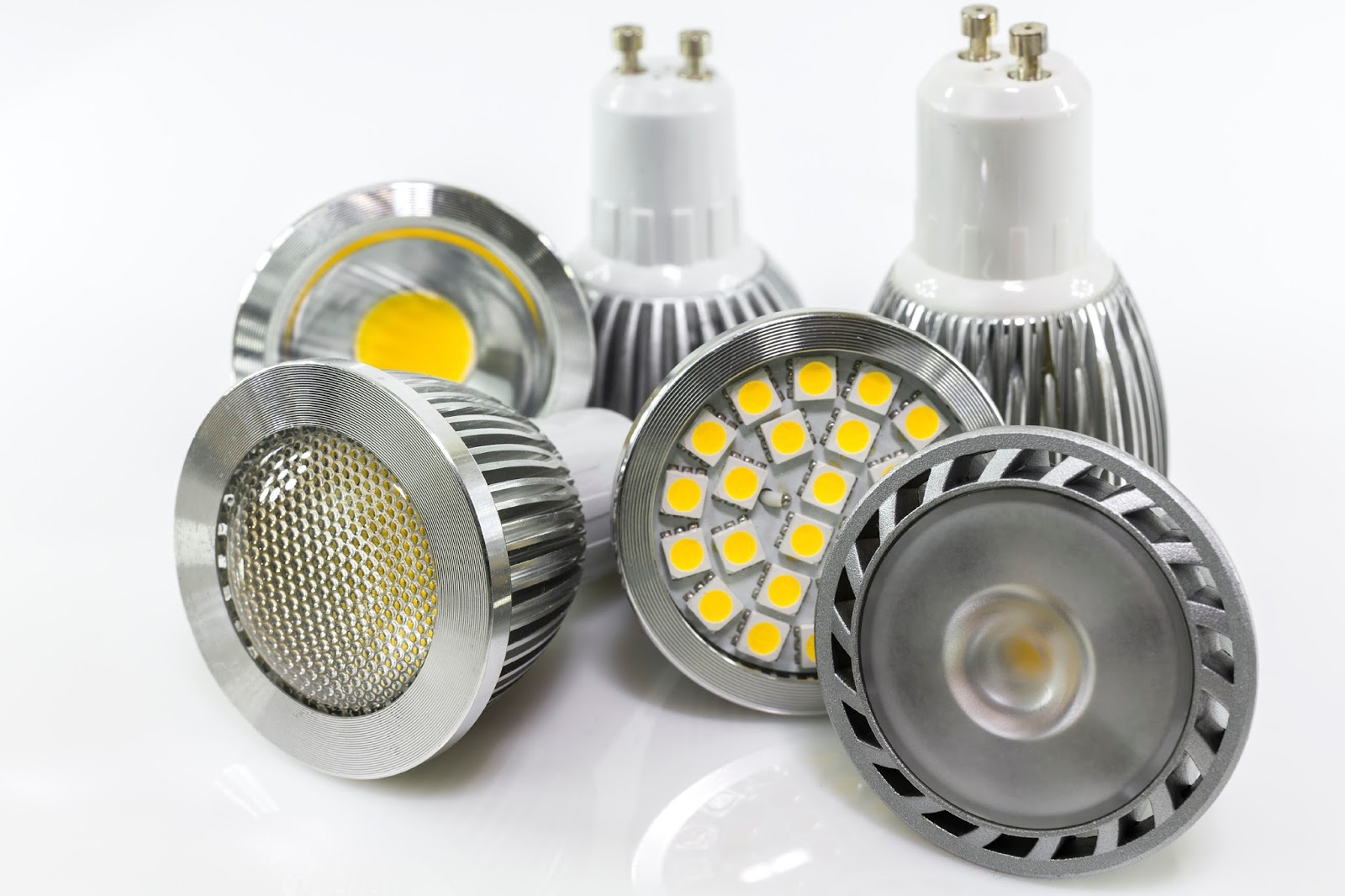
Even
better, once the switch has been made its not uncommon for LED light bulbs to
have lifetimes of up to 25 years before needed to be changed again. So again,
why the hesitation?
Partners on
both sides appear willing – customers clearly want cheaper bills and
manufacturers, at least on paper, have a product to sell that can help achieve
this goal.
In recent
years there has been a tide of stories where consumers have been the only real
victim; the horse meat scandal, rising energy prices in contrast
to falling oil prices, and the price fixing of milk to name a few. The latest? Fudged emissions data by Volkswagen to get their diesel cars through
the emissions testing process.
People
originally bought into diesel cars on the promise of a greener more efficient
technology. This has dramatically shifted into consumers being fooled into
purchases through corporate fraud and with senior executives looking
potentially complicit in the process.
Volkswagen
found a way of cheating in the lab tests for their vehicles’ emissions with a
‘defeat device’ that could sense when the car was being tested and adjust its
NOx emissions downwards accordingly. Another way of putting this is VW had
cheated because they were allowed to mark their own homework and avoid both
independent scrutiny and full public disclosure.

This
highlights a real need for transparency in the way data is gathered and the
software systems being used during and after performance tests. It also adds
fuel to the fire when it comes to consumer confidence in so-called ‘green’ or
‘clean’ technologies.
Make no
mistake we are all for LED lighting and believe its one of the biggest
no-brainers of the last decade; the
global cost of lighting energy is approximately $230 billion per year, of which $100 to $135 billion
can be saved with present-day technologies. However to realise these savings there is a desperate need to create
confidence with end-users to accelerate uptake.
Unfortunately,
an implicit assumption from consumers is that there will be gap between what brands
claim in terms of quality and what they will experience with LED lighting once
they buy it. The fairest way to tackle this problem is to put all lights on an
even playing field and test their performance claims through an independent
test lab in a consistent fashion.
We request
that manufacturers provide us with independent lab test to verify LED product
claims. We can then allow our users to filter products to see which LED bulbs
have had an independent lab test to verify the manufacturers claims. We hope
that implementing this proposal would help to create the trust needed by this new
and uncertain market place. Such a measure would allow people to make a truly
informed purchasing decision based around transparent data and impartiality
rather than brand strength alone.
Remember –
Volkswagen has been the top selling automaker in Europe for the past two decades. The point
we are making here is that data is essentially meaningless unless gathered in
an independent fashion. To truly inspire consumers to make that leap of faith
with a new technology means the onus is on manufacturers to reduce the risk on
the individual by providing as much transparent data as possible.
Relationships
are built on trust. At Which LED Light, we have discussed the psychology of consumers before in relation to manufacturers
and LED lighting. In the age of information, on-demand
brands need to look at consumers in less of a transactional fashion and more as
an ongoing relationship. The truth is just a Google search, tweet, or Facebook
post away. If people trust the technology and the benefits are clear then
uptake is inevitable and potential payback for people and planet is obvious.
The LED
lighting market is becoming increasingly crowded with large corporate
non-traditional lighting players like IKEA and Dyson entering the market alongside an influx of
start-ups. The manufacturers that are aware of this and act early will be the
ones that win out. Without trust LED light bulbs may take years to move into
the mainstream thus reducing sales for manufacturers and denying consumers one
of the most disruptive technologies of recent years.
In lighting,
as in all areas of life, trust is not granted, it has to be earned.
Posted 9:18 AM by Matt Prescott
|
![[Powered by Blogger]](http://buttons.blogger.com/bloggerbutton1.gif)